
Iraq

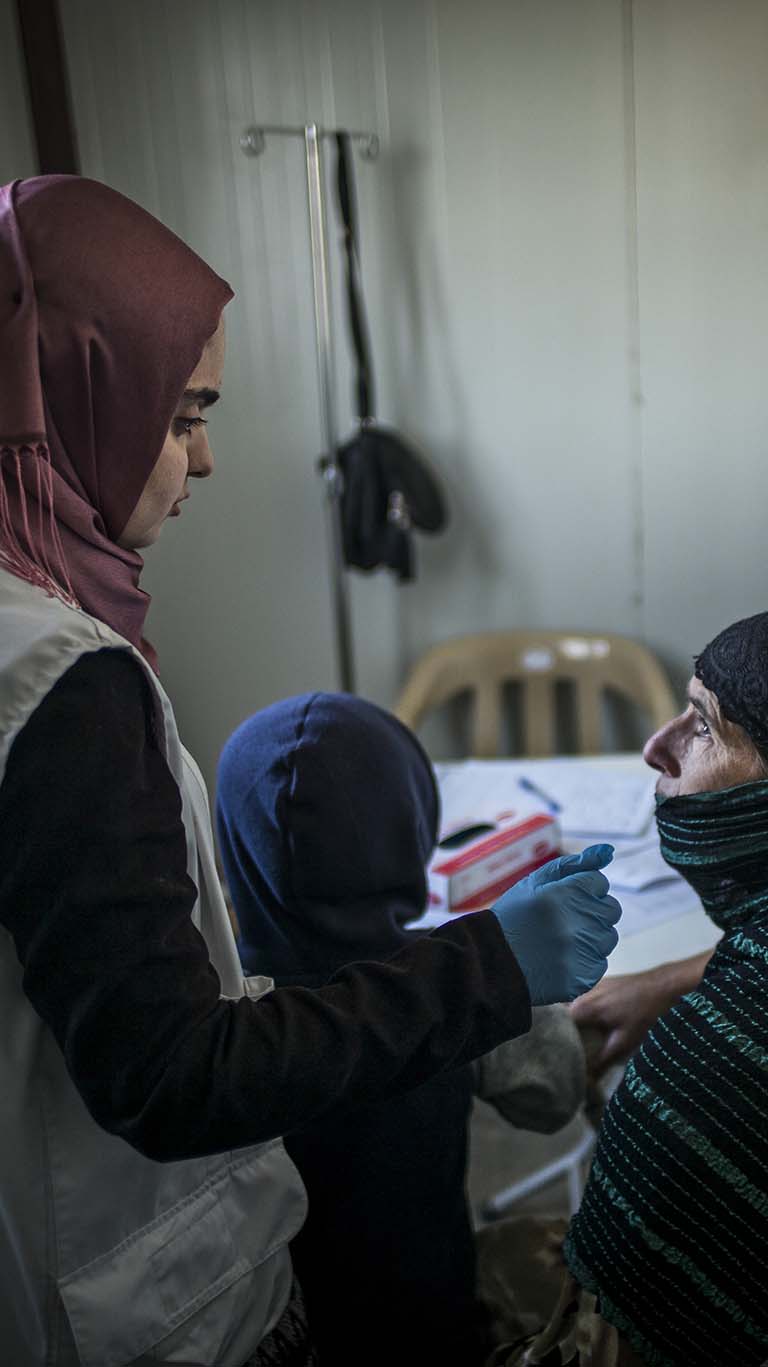
© Olivier Papegnies

1,3 MILLION

people internally displaced in Iraq.

3,2 MILLION

returnees in Iraq.

4,5 MILLION

people in Iraq need humanitarian assistance.

2,4 MILLION

people in Iraq don’t have access to healthcare and treatment.

Médecins du Monde’s emergency response includes a range of humanitarian assistance programmes. Find out more about our work in Iraq.

THE HUMANITARIAN SITUATION IN IRAQ

Since the beginning of the conflict with Islamic State in 2014, Iraq has been the scene of violent events which have forced millions of people into internal displacement.

The humanitarian situation has improved considerably since 2017, with a significant reduction in the number of people in need of humanitarian assistance – from 11 million people in 2017 to 2.5 million in 2023. However, the country is still extremely fragile and is facing multiple political, economic, social and security challenges.

  • INCREASING USE OF STIMULANT DRUGS

    Iraq is facing a growing public health crisis, especially in relation to substance use. There has been an exponential rise since 2020 in the number of people using drugs and this is happening in the context of political and economic instability and at a time when the healthcare system is severely weakened.

    Opioid abuse is common on Iraq’s eastern border, while in the north alcohol consumption is growing. According to UNODC, methamphetamine is now the most dangerous and most prevalent drug in Iraq. The use of amphetamine-type stimulants (ATS) is reported in several regions of the country, with Captagon particularly widespread in Baghdad. In 2022, a total of 2,251 people sought treatment for ATS use.

  • HEALTH SYSTEM CHALLENGES

    The increase in the number of people who use drugs is overwhelming the Iraqi health system, which lacks trained staff and resources to effectively treat the associated health problems.

    Social stigma and a relapse rate of 89%, according to the Iraqi Health Ministry, makes any treatment more complex. This trend also highlights an overall lack of knowledge about how to target specific non-injecting groups, such as those who use ATS.

    Rigid and repressive policies in this area also make access to healthcare for the most vulnerable groups more difficult. Nevertheless, the Iraqi government has developed a national strategy on narcotics and psychotropic substances and organised a regional event on this topic in 2023.

Fleeing war in Iraq

OUR HUMANITARIAN WORK IN IRAQ

Médecins du Monde has been working in Iraq since 1991, providing primary healthcare in partnership with local health authorities. Since 2023, our work has focused on targeted public health responses to specific needs in the Iraqi population, in particular harm reduction for people who use drugs.

  • SUPPORTING NON-INJECTING DRUG USERS IN BAGHDAD

    Médecins du Monde opened a community harm reduction centre for non-injecting users of stimulants in Baghdad in 2024. A local team was recruited and trained and contacts were established with peer workers to offer a range of mental health and psychosocial support services and a drop-in / day centre.

    The approach developed in Iraq is different from other harm reduction work done by Médecins du Monde because it concentrates almost exclusively on psychiatric, psychological and social work services. This is in contrast to the interventions more often delivered by MdM which focus on infectious diseases, such as HIV and hepatitis C, and involve the distribution of equipment (syringes and needles) and substitution treatment (methadone and buprenorphine). However, these responses are not suitable in the context of non-injecting stimulant use, so a different approach was developed.

    Médecins du Monde conducted an in-depth study of the local context to gain an understanding of the scale of the situation, identify risk factors and evaluate existing community protection measures. Our intervention aligns with the strategy of the Iraqi government’s mental health department.

Timeline
  • 1990

    Second Gulf War.

  • 1991
    Surgical missions, treatment of sick children, training for healthcare staff.
  • 2000
    Establishment of paediatric post-operative care units in four hospitals in Baghdad, Basra and Mosul.
  • 2003
    Emergency support for healthcare facilities during the war.
  • 2004
    Médecins du Monde leaves the country for security reasons.
  • 2006
    Programmes to improve emergency care and treatment.